Since its inception more than 300 years ago, Morden College has constantly evolved as a place for older people to live.
1623
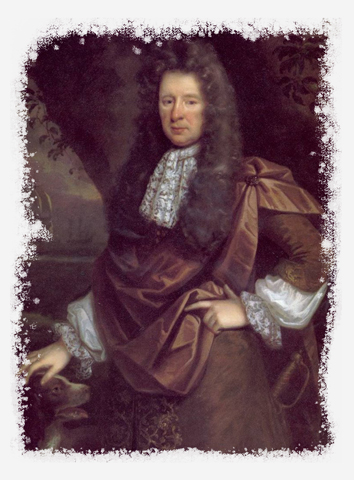 John Morden born in the City of London, apprenticed at age 20 to his uncle, Sir William Soame, and sent to Aleppo to work as a factor. He becomes an international trader and member of the Levant (Turkey) Company and the East India Company, returning to London in 1660 having amassed a substantial fortune.
1662
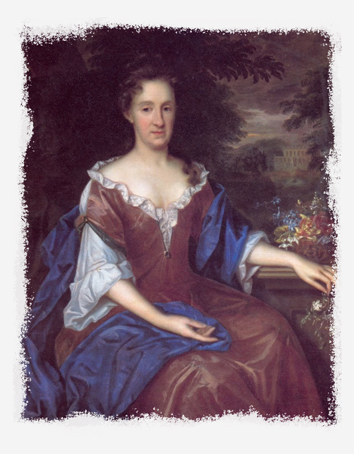 John Morden marries Susan Brand, daughter of merchant Sir Joseph Brand, of Edwardstone, Suffolk.
1669
1695
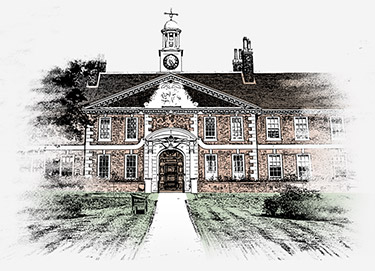 Morden College is founded by Sir John Morden, building on the north-east 11 acres of Wricklemarsh Manor. His intention is to provide board, lodging and a pension for traders who have fallen on hard times.
1708
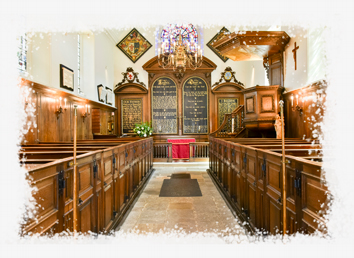 John Morden dies aged 86, and is buried in the Morden College chapel crypt. Statues of Sir John and his wife, Dame Susan, are added to the western front of the College in 1717.
1708 - 1884
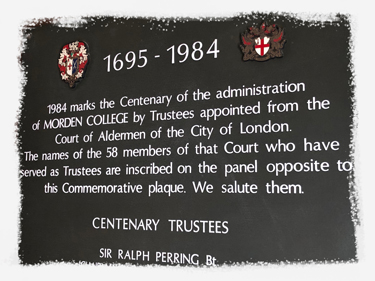 Under the terms of John Morden’s will, College trustees are drawn from the Turkey Company, and should it fail (which it did in 1834) from the East India Company, and should that fail then from the Aldermen of the City of London, who have provided the Charity’s trustees since 1884. A centenary plaque installed in the main entrance in 1984 commemorates the Aldermen’s association.
1966
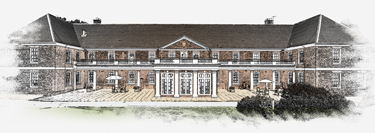 Wells Court built (refurbished in 2008), adding a further 20 flats to enable the Charity to provide independent living to more people.
1951 - 2010
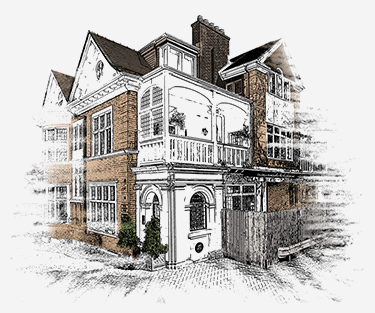 Broadbridge Close (1951), Montague Graham Court (1976), Peter Saunders Court (1994) and Graham Court (2010) continue the expansion of accommodation.
1971
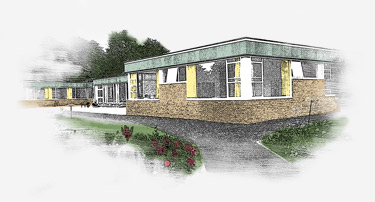 Cullum Welch Court built, enabling the Charity to offer full-time residential nursing care for the first time.
1991
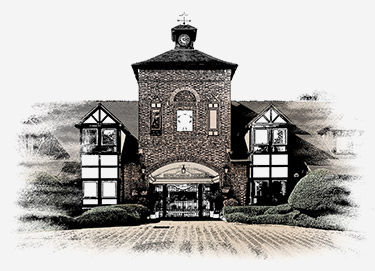 Ralph Perring Court built in Beckenham, more than doubling capacity by adding a further 101 flats, thus enabling the Charity to provide considerably more independent living facilities to both singles and couples.
2005
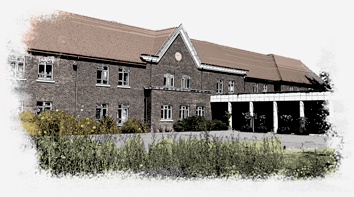 Cullum Welch Court completely rebuilt to include 60 en-suite bedrooms providing personal, nursing and dementia care.
2016
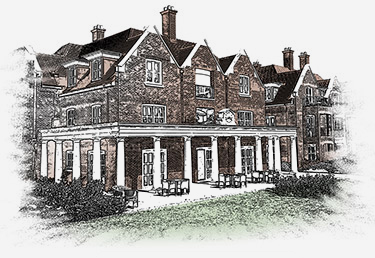 The most recent addition to independent living facilities, Alexander Court adds a further 30 flats for both singles and couples.
2019
2022
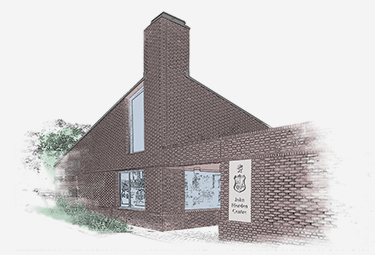 The John Morden Centre – an architecturally stunning, beautifully designed central hub on the Blackheath site – is completed but is delayed in its intended use thanks to the Covid-19 pandemic.
Morden College was founded in 1695 by John Morden. He was born in 1623 in the City of London, the son of a goldsmith, who died when John was about a year old. Apart from the fact that he had a sister, we know nothing about his early life. At the age of about 20, he was apprenticed to his uncle, Sir William Soame, master of the Grocers’ Company, and we understand that John was sent to Aleppo in Syria, trading in spices.
John Morden returned to England in 1659 and three years later married Susannah Brand, daughter of a Suffolk merchant, Joseph Brand of Edwardstone. John and Susannah Morden came to live in Blackheath in 1669 when he bought Wricklemarsh Manor, 200 acres of land south and west of today’s Morden College.
Sir John was briefly MP for Colchester. He was created a baronet in September 1688 by James II: Between 1693 and 1698 Sir John was firstly a Trustee and then Treasurer of Bromley College, a charity similar to ours, set up in 1666 for the benefit of clergy widows. Its buildings, set round a quadrangle, are very similar to ours. It may well have been his time there which was his inspiration in setting up his own College for the benefit of destitute – then known as “decayed” merchants.
For three years from 1695-1697 Sir John was a member of the Greenwich Survey Commission, redefining the boundaries of the King’s Manor of Greenwich and examining any encroachments which may have been made over time. During this same period, 1695-1700, the College was built.
Although the building has popularly been attributed to Wren, there is in fact no evidence that he designed it. The entrance is copied from the Hotel d’Ardilliers in Paris, and although Wren was influenced by his contemporaries, he never copied details exactly. It is most likely that Morden College was designed by one of the many City craftsmen/builders who were working after the Fire of London in 1666.
The College building was completed in 1700, and the first five pensioners came into residence that year. It was only after the deaths of both Sir John, in 1708, and Lady Morden, in 1721, that funds were sufficient to support the full complement of forty men.
The buildings
Our imposing west front has two projecting wings designed to provide homes for the Chaplain and the Treasurer, the two chief officers. The effigies of Sir John and Lady Morden above the entrance were put up some time after 1717.
The Quadrangle remains externally as it did when first built, with its fine colonnade. The sundial, although it bears the date of the College foundation, 1695, in fact was put up only in 1725, ‘ for keeping the clock right, which often goes wrong’, as the Minutes record. The basins of water were put in about 1751, to supply the fire engine given to us by one of the Trustees in that year.
There was a tragic incident recorded in the Minutes of 1897, however, when one of the residents overturned a lamp and set light to his apartment, sadly himself suffering burns from which he later died. The fire is recorded in the Minutes, but not how it was extinguished, and whether the fire engine was put to use. It was following this incident, however, that there was a discussion about the possible introduction of electricity to the College.
The lamppost was put up only in 1844, the same year as gas was introduced to the College. There was also a spate of building in 1844. The dining room was built in that year to the design of George Smith. He was the College surveyor as well as an architect of note, and it was to his design and specification that many of the streets in Greenwich, at that time owned by Morden College, were built.
The residents
The people who have lived here have been known variously over the years as inmates, pensioners, members, residents, and now beneficiaries. Sir John’s intention was to offer housing to people who were to be of a minimum age of 50 years, to have been merchants of the Turkey or Levant Company or the East India Company, engaging in transmaritime trade, and to have fallen on hard times through no fault of their own. Sometimes the trade in a particular commodity declined, some had fraudulent partners.
This was a time long before pensions, and there are applications from men who pleaded failing health and an inability to continue to work perhaps in their late seventies or even eighties. They had to be single men, either bachelors or widowers, and to have no family in a position to support them. They had to be practising members of the Church of England, and to promise to abide by the rules of daily chapel attendance, dining in hall, constant residence, to maintain sober and peaceable behaviour and of course never to entertain women in their apartments. In return they were provided with £20 per annum, a cloak, coals, and servants.
Administration
Sir John Morden governed the College himself until his death in 1708, and by the terms of his Will laid down that the College should be in the care of 7 trustees. They were to be appointed from the Turkey, or Levant, Company, one of the chartered trading companies of the seventeenth century. Should the Turkey Company ever fail, which it did in 1825, the trustees were to be appointed from the East India Company, and should that company cease to be, as happened after the Indian Mutiny, then the trustees were to be drawn from the Aldermen of the City of London. Should the City of London ever fail, then Sir John specified that we have recourse to the Gentlemen of Kent.
The day-to-day running of the College was in the hands of the Treasurer and the Chaplain. Applicants for these posts were to be granted preference if they could claim kinship with the founders and until 1872 the officers were descendents of Sir John and Lady Morden.
During the 19th century the Charity Commission was set up to look into all private charities such as ours. The first scheme for Morden College was introduced in 1871 though it has been amended many times since then. The terms of Sir John’s Will were relaxed: members could now be drawn from a wider background: outpensions were established for family men who were unable to come into residence; wholesale dealers were admitted, later company directors and the professional and managerial classes in general.
The dramatic expansion of the College has happened only since the Second World War. Broadbridge Close was built in 1951, providing the first accommodation for married couples, and this was followed in 1957 by Alexander Court. 32 Vanbrugh Park was purchased in 1958 and 33 Kidbrooke Grove in 1962. Then Wells Court, originally providing bed-sitting rooms for single women, was opened in 1966, now refurbished as single and double flats. 3 St Germans Place was purchased in 1968 and the nursing home Cullum Welch Court, was built in 1971. A second storey was added in 1991 with the need to provide for residents of Ralph Perring Court. Montague Graham Court was built in 1976, Peter Saunders Court was converted in 1994, and 13 Morden Road acquired in 1995 following the move of Blackheath High School Junior School into the buildings formerly occupied by their senior school in Wemyss Road. Cullum Welch Court was rebuilt in 2005; Alexander Court in 2015, and expansion continued in the redevelopment of Stonefield, 58 Kidbrooke Grove, now renamed Graham Court. Of these later additions, Ralph Perring Court is far and away the largest, effectively doubling the overall number of beneficiaries of Morden College.